



When Winter Bites: Your Guide to Heater Installation in McPherson
Heater installation mcpherson ks becomes a critical concern when Kansas temperatures plummet and your home’s heating system starts showing its age. With McPherson winters bringing unpredictable weather patterns, biting winds, and frigid temperatures that can drop in an instant, having a reliable heating system isn’t just about comfort—it’s about safety and peace of mind. A sudden breakdown can lead to more than just a chilly night; it can risk frozen pipes, which can cause catastrophic water damage to your home.
Quick Answer for McPherson Heater Installation:
- Signs you need replacement: Frequent, costly repairs, steadily rising energy bills, hot and cold spots, or a system that is over 15 years old and losing efficiency.
- Best heater types for Kansas: High-efficiency gas furnaces, versatile heat pumps (especially dual-fuel systems), or targeted ductless mini-splits depending on your home’s specific needs.
- Installation timeline: A standard replacement typically takes 1-3 days when handled by a professional team.
- Key consideration: Always choose NATE-certified technicians to ensure the installation is done safely, correctly, and in compliance with your manufacturer’s warranty.
Many McPherson homeowners don’t realize that 55% of their energy usage goes toward heating and cooling. An inefficient or failing heater doesn’t just leave you shivering—it drives up utility bills and can create significant safety hazards, from fire risks to poor air quality.
Old heating systems work much harder to maintain comfortable temperatures, especially during those brutal Kansas cold snaps. As your heater struggles, it consumes more and more energy while delivering less consistent warmth throughout your home. The difference between a well-functioning modern heater and an aging, inefficient system can mean the difference between cozy winter evenings and constant worry about breakdowns during the coldest days of the year.
1. Recognizing the Telltale Signs for a Replacement
Your heating system has a way of communicating with you—sometimes it whispers, other times it practically shouts! Learning to recognize these signals can save you from the nightmare of a complete breakdown during one of McPherson’s brutal winter nights. When you know what to look for, you can plan ahead for heater installation mcpherson ks instead of scrambling for an emergency replacement.
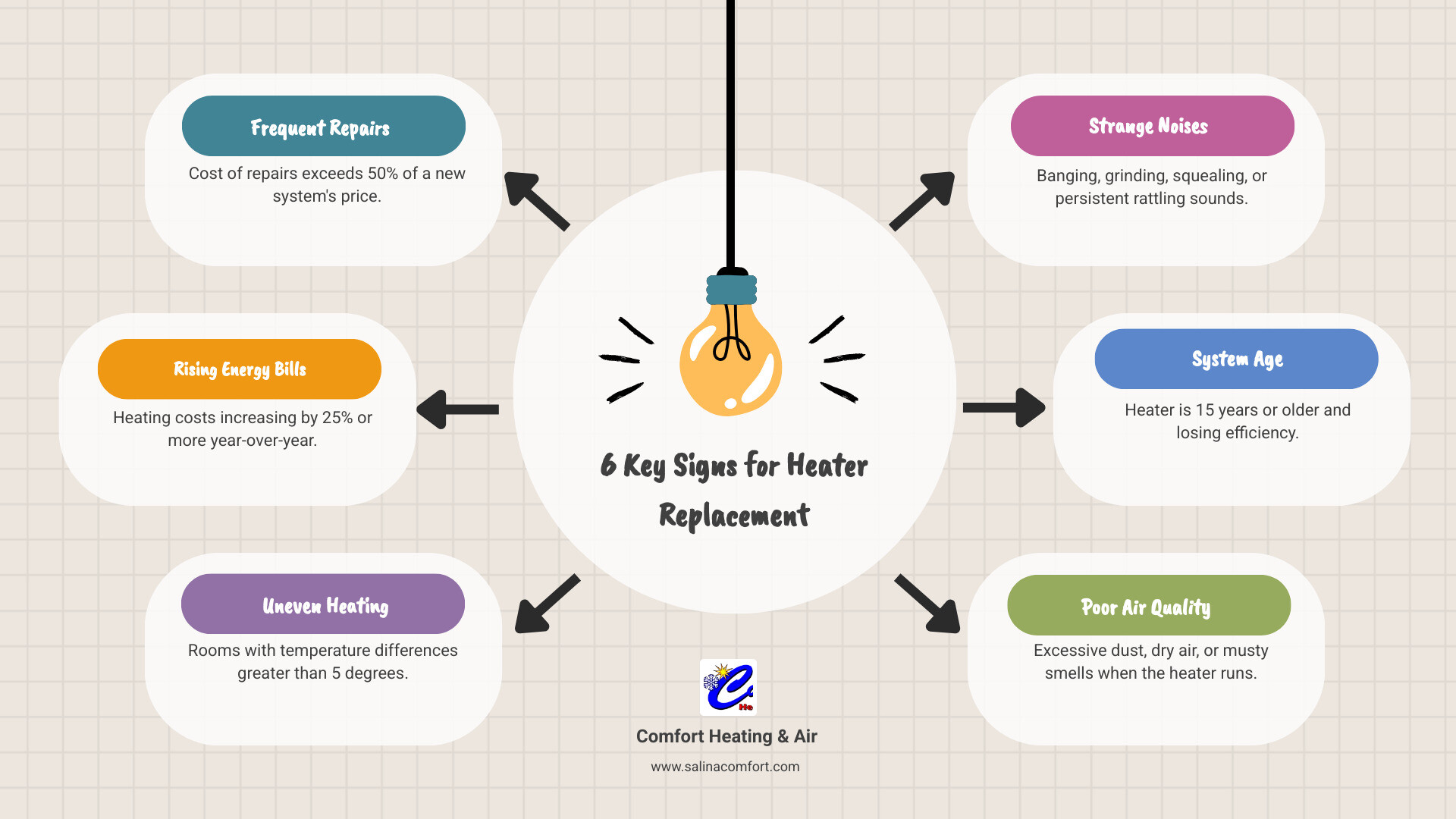
The most obvious red flag is frequent repairs. If your HVAC technician is on your speed dial, it’s a problem. A good rule of thumb is the “50% rule”: if a repair costs 50% or more of what a new system would, it’s more financially sound to invest in a replacement. Constantly patching up an old unit is throwing good money after bad.
Another telltale sign is rising energy bills that seem to climb higher each month, even when you haven’t changed your heating habits. An aging system loses its efficiency, forcing it to run longer and work harder to produce the same amount of heat. This gradual decline can add up to hundreds of dollars in wasted energy over a single season.
Uneven heating throughout your home creates its own frustrations. If you have to bundle up in the living room while the bedroom feels like a sauna, your system is failing. This inconsistency indicates that your heater’s blower motor is weakening or the unit can no longer effectively push warm air through your entire ductwork system.
Pay close attention to strange noises. While some operational sounds are normal, new or loud noises are a cry for help. Banging or popping can indicate ductwork problems or delayed gas ignition. Grinding or scraping often points to worn-out motor bearings. Squealing can mean a failing belt or blower motor. Ignoring these sounds almost always leads to a more severe and costly failure.
System age over 15 years automatically puts your heater in the replacement consideration zone. Even with diligent maintenance, most furnaces and heat pumps see a significant drop in efficiency and reliability after this point. Modern systems are far more efficient, and the energy savings alone can often justify the upgrade.
For gas furnaces, a yellow pilot light demands immediate attention. A healthy flame should be a crisp, steady blue. A yellow or flickering flame indicates incomplete combustion, which can release dangerous carbon monoxide into your home. This is a serious health and safety emergency that requires immediate professional service.
Finally, poor indoor air quality often connects to an aging heating system. If your family experiences more allergies, dry skin, or respiratory irritation at home, your heater could be to blame. Older systems can circulate excessive dust, dander, and mold spores. Modern units offer advanced filtration and humidity control options that create a healthier indoor environment.
Recognizing these warning signs early gives you control. Instead of facing an emergency replacement during the coldest week of winter, you can research options, schedule installation at your convenience, and ensure your family stays comfortable all season long. For more information on keeping your current system running smoothly while you plan, explore our insights on expert furnace repair.
2. Choosing the Right Heater for Your McPherson Home
Finding the perfect heater for your home feels a bit like matchmaking—you want a system that works well with your house’s unique personality and Kansas’s challenging weather patterns. The good news? With the right information, you can make a choice that keeps your family comfortable and your energy bills in check for years to come.
Kansas throws everything at us, from bone-chilling winters that dip well below zero to sweltering summers. Your heater installation mcpherson ks needs to handle these dramatic temperature swings with ease. This means selecting a system robust enough for the coldest days, but also efficient enough not to waste energy during milder weather. Homes with tighter building envelopes (good insulation and air sealing) may be comfortable with smaller systems, while older or draftier homes benefit from equipment and airflow strategies that can handle higher heat losses.
Your home’s size and layout are paramount. A professional installer doesn’t guess—they perform a detailed load calculation (often called a Manual J calculation) to determine the precise heating needs of your home. Factors like square footage, ceiling height, insulation quality, window type and quantity, and even which direction your house faces are all analyzed. Getting this sizing wrong is a critical error. A system that’s too small will run constantly without ever reaching the set temperature, while an oversized system will short-cycle (turn on and off frequently), wasting energy, creating uneven temperatures, and failing to properly control humidity.
Energy efficiency ratings are your guide to long-term savings. For furnaces, look for the AFUE (Annual Fuel Utilization Efficiency) rating. An 80% AFUE furnace converts 80 cents of every fuel dollar into heat, while a 95% AFUE furnace converts 95 cents. For heat pumps, SEER (Seasonal Energy Efficiency Ratio) and HSPF (Heating Seasonal Performance Factor) ratings measure cooling and heating efficiency, respectively. Higher numbers always mean greater efficiency. If you want a deeper dive into how these ratings work and what they mean for real-world performance, the U.S. Department of Energy’s overview is a helpful resource: DOE: Furnaces and Boilers.
Beyond efficiency, consider comfort features that make a noticeable difference in daily use: variable-speed (ECM) blower motors, multi-stage or modulating gas valves, and adaptive controls pair with smart thermostats to deliver steadier temperatures, quieter operation, better humidity management, and improved air filtration—benefits you’ll appreciate during dry, windy Kansas cold snaps.
Fuel availability in McPherson gives you several excellent options:
- Natural Gas Furnaces: These remain a popular choice for their powerful heating capabilities and affordable fuel source. Modern furnaces come in several varieties: single-stage (always on at 100% capacity), two-stage (can run at a lower, energy-saving capacity), and modulating (adjusts its output precisely, providing the ultimate in comfort and efficiency).
- Heat Pumps: These all-in-one systems are incredibly efficient because they move heat rather than creating it. They heat your home in winter and cool it in summer. For the Kansas climate, a dual-fuel system is an outstanding choice. This pairs an electric heat pump with a gas furnace, using the hyper-efficient heat pump for most of the winter and automatically switching to the powerful furnace only on the most frigid days. Cold-climate heat pump models maintain capacity at lower outdoor temperatures, broadening their usefulness in McPherson’s deep freezes.
- Geothermal Systems: The premium choice for efficiency, geothermal systems use the stable temperature of the earth to heat and cool your home. While the upfront investment is higher, they offer the lowest operating costs and an exceptionally long lifespan.
| Heater Type | Efficiency | Best Use Cases |
|---|---|---|
| Gas Furnace | 80-98% AFUE | Homes with natural gas access; quick, powerful heating needs; pairs well with central AC. |
| Heat Pump | 14-20 SEER, 8-13 HSPF | Year-round heating and cooling; energy-conscious homeowners; ideal for dual-fuel systems in Kansas. |
| Ductless Mini-Splits | 16-30+ SEER | Room additions; older homes without ductwork; solving hot/cold spots; zoned temperature control. |
Don’t overlook your ductwork: even top-tier equipment can underperform if ducts are leaky, undersized, or poorly balanced. Asking for a duct inspection and necessary sealing or resizing keeps more of your heat where it belongs—inside your living space.
The beauty of working with experienced professionals is that they can evaluate all these factors together, helping you find the sweet spot between comfort, efficiency, and reliability. For more detailed information about heating options that work well in our Kansas climate, explore our comprehensive guide to heating services.